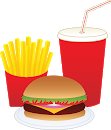
5. Fast Foods: People who thrive on fast foods (and often on oversize orders) not only become obese and lethargic but may also demonstrate high LDL cholesterol. They also tend to suffer from Non-alcoholic Fatty Liver Disease (NAFLD), a condition afflicting about 30% of Americans. In NAFLD, liver cells eventually get infused with fat. (The progression from insulin resistance, obesity, diabetes, elevated triglycerides and poor nutrition finally ends by storing sugar in the liver as fat.)
Consumers of fast-food consisting of meat and dairy products run a serious risk of getting infected with drug resistant bacteria, the so-called ‘super bugs’. The U.S. Centers for Disease Control and Prevention estimates that every year two million people are infected by such bacteria and 23,000 die from it. This is one of North America’s top five health threats.
About 70 percent of important antibiotics used in human health care are sold to farmers engaged in meat and dairy production. (To prevent the spread of diseases among animals raised in industrial-scale facilities which very often are crowded, unsanitary and stressful, antibiotics are routinely fed to them.) Overuse of these medicines on animals is attributed to the rise in life-threatening human infections from antibiotic-resistant super bugs. Super bugs mean more infections and deaths because of the declining effectiveness of antibiotics making many thousands more American patients vulnerable to potentially fatal infections after surgery and chemotherapy for cancer.
6. Sodium Sensitivities: Therecommended daily sodium consumption is no more than 2,400 mg or about a teaspoon of table salt. Reducing to 1,500 mg is desirable because sodium retains water thus increasing blood volume. This boosts the blood pressure causing the heart to work harder. Recently, New York City issued instructions alerting city restaurants about the dangers of salt and its levels in the food they serve.
One simple advice for patients with hypertension: ‘When food hits the table, don’t add salt.”
7. Energy Drinks/Soda Pops:Health experts from the American Heart Association & Academy of American Pediatrics now warn that ingredients in Sports/Energy drinks can cause health problems in young people including blood pressure spikes. Caffeine has been linked to several harmful health effects on children in their neurological and cardiovascular systems. They recommend that drinks containing caffeine should be avoided by the young. Caffeine poisoning generally occurs at levels of 440 mg/day or higher; in adolescents, it can also occur at 100 mg. Another ingredient in some drinks contain pharmaceutical grade caffeine. It can cause the heart to race and blood pressure to rise.
People who drink two or more sugar-sweetened soft drinks a week are 87% more likely to get pancreatic cancer. Researchers suspect that the sugar in the colas bumps up insulin, which has been shown to contribute to pancreatic cancer cell growth.
Another word of caution. A steady diet of sodium laden ‘junk’ foods and caffeine refreshments poses a risk. This combination can lead to the formation of painful pellets in the urinary tract. Such a buildup of minerals in the urine is also a byproduct of dehydration, accelerated by too much sodium and caffeine. Another fact to remember: Calcium oxalate, commonly found more in red meats can also pose a similar risk.
8. The Devil inside Alcohol : The advice, “One drink a day may benefit your heart,” may be tricky if not misguided. (One drink is the equivalent of one glass of wine (5 0z.) or one can of beer (12 oz.) or one shot of hard liquor (1.5 oz.). Truly, people who do not drink, need not hasten to start this habit to help their heart. Too much liquor can weaken the heart muscle, making it large and floppy and raise blood pressure. As a diuretic, liquor causes water loss thereby dilating the heart; then it can’t squeeze as well as it normally should. Here is another way to look at alcohol consumption. It hurts the body in three ways. Liquor is loaded calorically with dense molecules; it changes how we metabolize fat; hence the “beer belly”. Thirdly, when we drink, we tend to overeat because we often fail to realize how much we have already consumed.
Many health scientists believe alcohol also kills the neurons of our brain and also the good bacteria in our guts. Even though we are endowed with millions of neurons, with years of alcohol abuse they too take a toll. Similarly, when good bacteria in out guts are lost the bad bacteria take over and the urge to consume “bad” food increases.
When over-intoxicated, how our brain behaves is well known. Driving under the influence (DUI) causing motor vehicle accidents, aggravated misbehavior and courage to commit crimes are very common examples in almost all cultures.
Another casualty from alcohol abuse is the liver. Because the liver performs a crucial two-fold function—processing all food and destroying its harmful contents, it is a very important organ. The liver can be damaged or injured if alcohol consumed is more than it can process. Alcohol fatty liver disease, alcoholic hepatitis and alcoholic cirrhosis are three such alcohol induced maladies.
9. Vitamins & Food Supplements: Beware! Some unapproved drugs labeled as botanical products are sold as food supplements for body building, weight loss or as brain and performance enhancers, e.g. Vinpocetine and picamilon. In fact these are medications sold in other countries for cardiovascular disease and cognitive impairment. These chemicals are also found in many other so-called food supplements.
 India International Health Foundation